Buying guides
How to check an ASIC miner seller before you pay
Check an ASIC miner seller in fifteen minutes: company record, web address, payment details, invoice, serial numbers, and the signs of a fake offer.
Short answer
Find the company in its public register and match its legal name on the site, the invoice and the payment details. Ask whether the machine is in the seller's own stock or ordered from the manufacturer, and ask for the proof that fits. A personal bank account, or a wallet address that arrives by chat, is the sign to stop.
A miner is a serious purchase, and you often buy it from a company in another country. Most of these sales go well. The ones that go wrong nearly always show signs before the money leaves, and anyone can look for them. Here is how to check an ASIC miner seller in about fifteen minutes, in the order that finds problems fastest. If you are still choosing a model, start in our shop. Use the checks on everybody, us included: how to tell that a message or an invoice is really ours is on our fraud alert page.
How do you check an ASIC miner seller step by step?
| Check | Where | Time | A good answer |
|---|---|---|---|
| Company record | The public register of its country | 3 minutes | The legal name on the site is there and active |
| Web address and contacts | The address bar and the emails | 2 minutes | One domain everywhere, spelled right |
| What others say | Search with "complaint" and "scam" | 3 minutes | No pattern of unanswered problems |
| Payment details | The order page and its invoice | 2 minutes | A company account, or a wallet shown on your order |
| Invoice | The document itself | 2 minutes | Full details, and a way to verify it |
| The machine | Own stock, or ordered from the manufacturer | 3 minutes | The proof that fits that answer |
Read the answers together. One small oddity usually has an ordinary reason. One false statement about who the seller is, or an account in a private person's name, is enough to stop.
Is the company real?
Look for the legal name first. A serious shop prints it on an imprint, terms or company page, with the country where it is registered. Copy that name and search the register of that country yourself. Do not follow a link from the seller.
Many registers are free. The British one, for example, shows company information, previous names and insolvency records without charge. US states run their own registers, so search the state named in the terms. Many free zones keep a register too.
Compare three things:
- The name, letter for letter, including the ending such as Ltd, GmbH or LLC-FZ.
- The country. The place of registration on the site is the place where you find the record.
- The status. Active, not dissolved or struck off.
A brand and a company often have different names. That is normal. What counts is that the site says which company stands behind the brand, and that the same company sends the invoice.
A register entry proves that a company exists. It does not prove that the person writing to you works there, because scammers borrow the names of real firms. That is what the next checks are for. You can practise on us: our legal name and place of registration are on our company details page.
What does the web address tell you?
Read it slowly. Copycat sites live on small changes: one letter more, a hyphen, an extra word such as "official" or a country. Bitmain's help centre keeps a public list of more than thirty addresses that use its name without permission, so this is worth ten seconds every time. A padlock or https does not settle it. It shows that the line is encrypted, not who is at the other end.
Three quick habits:
- Type the address yourself. The first results of a search can be paid adverts, and scammers buy those too.
- Compare the email with the site. The part after the @ should be the same domain.
- Look for a page that lists the official channels. A shop that names its email, phone and accounts makes fakes easy to spot.
You can also look up when a domain was registered, in a public lookup such as the one ICANN runs. Treat the date as background. Age alone proves little: every honest shop was new once, and old domains are bought and sold. It only matters when it contradicts what the site itself claims, and then you weigh it with everything else.
What should "official distributor" mean to you?
A seller who calls itself the official distributor should be on the maker's own list. Look there, or ask the maker. That is the whole check.
The words are not needed for a good purchase. An independent shop can be the better choice for a single machine: smaller orders, delivery to your door, several makers side by side and one contact for questions. Judge it by its company record, its papers and its answers about the machine.
Which payment details are safe?
Bank transfer and crypto are both normal ways to pay for miners. The sum is large and the buyer and seller are often in different countries. The way of paying is not the sign. Where the details come from, and whose name is on them, is.
| You see | What it means | What to do |
|---|---|---|
| A bank account in the name of the company on the invoice | Normal | Match the name letter by letter |
| A wallet address on your own order page | Normal | Copy it there, compare the first and last characters |
| A bank account in a private person's name | A warning sign | Stop and ask through a channel you found yourself |
| A wallet address that arrives by chat or email | A warning sign | Do not use it; look at your order page |
| New payment details after the order | A warning sign | Call a number you found yourself |
| Gift cards or cash services | Not how machines are sold | Walk away |
Crypto payments typically cannot be reversed, and a transfer is hard to call back once it is paid out. So do the checks first and pay afterwards, whichever way you use. Our shop takes bank transfer or crypto. You choose, and the details are only on the page of your order and on its invoice.
Before any payment, to us or to anybody:
- Match the names. The account holder is the company on the invoice.
- Call back. If details come by email or chat, ring a number you found yourself and have them read out.
- Treat changed details as fraud until you have proved otherwise.
- Use the payment reference from the invoice, and keep the proof of payment.
What belongs on a real invoice?
Ask for a pro forma invoice before you pay. It costs a real company a few minutes. It should show:
- The seller's legal name.
- Your own name or company, and your address.
- The exact model with its hashrate, the quantity and the price.
- The total and the currency.
- The payment details, with the company as the account holder.
- A number that you can check with the seller.
The delivery term and the warranty can be on the invoice, on the order or in the terms of sale. Wherever they are, read them before you pay: who pays delivery, who pays duty and tax, whose warranty it is and what starts the clock.
Then lay the papers side by side. The same company should appear on the site, on the invoice and in the payment details. If three places show three names, ask why. Every invoice of ours has a verification code, and the fraud alert page tells you whether it is genuine.
Is the machine in stock, or ordered from the manufacturer?
Ask this in plain words, because both answers are good and each has its own proof. Many new machines are ordered from the manufacturer after the buyer has paid. Others stand in the seller's own warehouse. A photo cannot exist for a machine that has not been built yet, so do not ask for one.
| If the seller says | Fair to ask for |
|---|---|
| It is in our own stock | A dated photo of the unit and its label, with the serial number |
| We order it from the manufacturer | The batch, the ship month and the pro forma invoice, in writing |
| It is used | A short video of it running, with the dashboard and the serial number |
For a machine you order, the serial number comes later, with the invoice or the dispatch papers. Enter it on the maker's own warranty page when you have it: the model and the dates should fit. Our warranty page links the serial check of each maker.
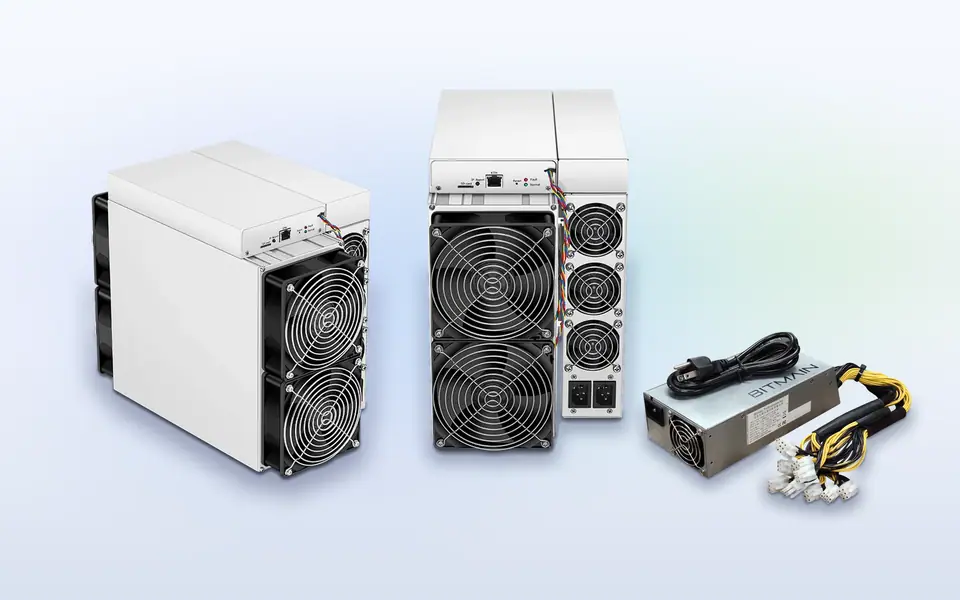
Pictures deserve a careful look. Bitmain warns about photos taken from the internet and about machines swapped for another model in a similar case. Compare the case, the label and the ports with the maker's pictures of that exact version. For a used machine, work through our inspection checklist.
Ask who handles a warranty claim, too. A good seller says it in one sentence. For new machines bought from us, you write to us and we raise the claim with the maker.
Which signs point to a fake offer?
Start with the price, in context. Take the exact hashrate, look at what several shops ask for it, and place the offer in that row. Prices differ for honest reasons: the batch, the ship month, delivery in or out, a used unit. A price at a small part of all the others, without a reason you can check, is a sign.
Others, each worth a question:
- A timer, a last unit, a price for the next hour. A purchase of this size can survive a night's sleep.
- A new fee to the seller after you paid that was on no paper before. Import tax in your country is different: it goes to customs or the carrier, and the delivery term on the order says who pays it.
- Fixed earnings in the sales pitch. Mining income moves with difficulty and price, and an honest page shows its inputs.
- Contact that starts with them, on Telegram or WhatsApp, with a machine you did not ask about.
- A request for your seed phrase, private key or password. Nobody who sells a miner needs them.
- A refusal of normal questions. Company name, papers, ship month: a seller has these to hand.
Compare full prices. Delivery, duty and tax can be in or out, and an honest higher price may be the cheaper machine at your door. Our prices include delivery, and the product page shows the price of the batch or stock you pick.
What should you keep, and what if you paid a fake?
Keep the order page, the invoice, the emails and the proof of payment in one folder, with the ship month you were given. Add the serial number and the photos when the machine arrives. It is also the folder you need for a warranty claim.
If you think you have paid a fake:
- Call your bank now, not tomorrow, and ask it to stop or recall the payment. With crypto, tell the exchange you sent from.
- Report it to the police or your national fraud office.
- Save everything before the site or the chat disappears.
- Pay nothing more. A "recovery agent" who writes to you afterwards is usually the second half of the same trick.
And if the fake used our name, tell us so that we can warn other buyers.
The short version
Register, web address, reputation, payment details, invoice, machine. Six checks, fifteen minutes. A good seller will not mind a single one, and will often have the answers on a page already. Ours are in eight public promises. If you want to ask something before you order, a person answers on our contact page.
Common questions
How do I know if an ASIC miner website is legit?
Find its legal name in the public company register, and make sure the same company stands on the site, the invoice and the payment details. Then ask for the proof that fits the machine: a dated photo for own stock, the batch and ship month for an order.
What does official distributor mean?
A seller who calls itself the official distributor should be on the maker's own list. Independent shops do not need the title; judge them by their record and their papers.
Is it safe to pay for a miner in crypto or by bank transfer?
Both are normal. Check the seller first, take the details only from your own order page and invoice, and make sure a bank account is in the company's name.
Should a seller send me a photo of my machine?
If it says the machine is in its own stock, yes. A machine ordered from the manufacturer does not exist yet, so ask for the batch, the ship month and the pro forma invoice.
How can I check a miner's serial number?
Enter it on the maker's warranty page. The model and the dates should match. For an ordered machine you get the number with the invoice or the dispatch papers.
Is a very low price always a scam?
No. Used machines, older batches and later ship months explain many low prices. A very low price without a reason you can check is the sign.
How do I verify an invoice from Project Hash?
Enter the invoice number and the verification code on our fraud alert page. Our payment details appear only on your order page and its invoice.
Written by Hardware Desk
Reviews, comparisons and buying guides