
















Profitability
How long does it take to mine 1 Bitcoin?
How fast each miner earns bitcoin: sats a day, time to 0.01 BTC, machines for one bitcoin a year and the power cost.
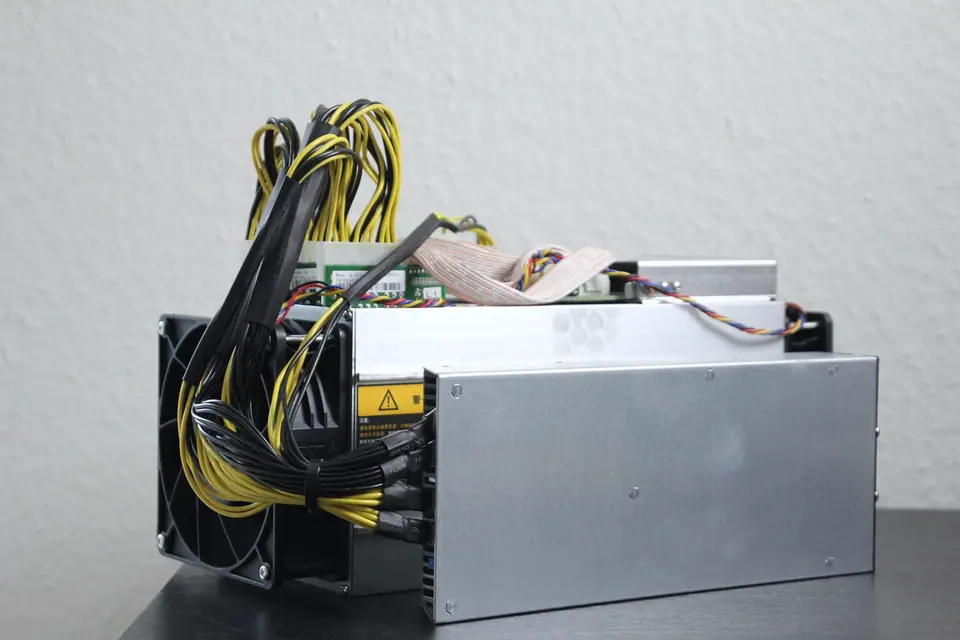
Short answer
At the difficulty of 24 November 2026, one Antminer S21 Pro in a pool earns 10,965 sats a day, so 0.01 BTC takes about three months and 25 machines reach one bitcoin in a year. The whole network makes a bitcoin about every three minutes.
- S21 Pro machines to mine 1 BTC in a year
- 25
- Bitcoin difficulty, 24 Nov 2026
- 134.8 trillion
- New bitcoin per block
- 3.125 BTC
- Earned by 1 PH/s in a day
- 46,900 sats
How long does it take to mine 1 Bitcoin? The network makes one about every three minutes. With your own machines it depends on how many you run: you are paid for your share of all the hashing in the world, every day. This page shows the sats a day of real machines at the difficulty of 24 November 2026 and how many reach one bitcoin a year. For your own machine and today's figures, use the mining calculator.
How long does it take to mine 1 Bitcoin with one machine?
The table leads with sats a day and the time to 0.01 BTC (calculator), if nothing about the network changed. It assumes a mining pool, round-the-clock running and no pool fee. A satoshi, or sat, is the smallest unit: one bitcoin is a hundred million of them.
| Machine | Hashrate | Sats a day | 0.01 BTC in | 1 BTC in |
|---|---|---|---|---|
| S23 Hyd 3U | 1,160 TH/s | 54,354 | 18 days | 5 years |
| S23 | 318 TH/s | 14,901 | 2 months | 18 years |
| S21 XP | 270 TH/s | 12,651 | 3 months | 22 years |
| S21 Pro | 234 TH/s | 10,965 | 3 months | 25 years |
| S21 | 200 TH/s | 9,371 | 4 months | 29 years |
| S19k Pro | 120 TH/s | 5,623 | 6 months | 49 years |
| Avalon Q | 90 TH/s | 4,217 | 8 months | – |
| Avalon Mini 3 | 37.5 TH/s | 1,757 | 2 years | – |
| Avalon Nano 3S | 6 TH/s | 281 | 10 years | – |
| Bitaxe Gamma | 1.2 TH/s | 56 | 49 years | – |
Hashrates are the rated figures of our Bitcoin miners, and the sats follow from the calculator. A pool keeps a fee of roughly 1 to 4 percent, and a machine that is off one day in twenty earns 5 percent less, so add a little to each time.
Two things stand out. The column to look at is the hundredth of a bitcoin, because that is a goal one person can reach. And twice the hashrate takes exactly half the time, with no bonus for size: ten machines take a tenth as long as one.
Why do people say it takes 10 minutes?
Because a block is found about every ten minutes, and a block holds more than one bitcoin. Each block pays its finder 3.125 BTC of new coins plus the fees of the payments inside it. So somewhere in the world, bitcoin are mined at a rate of about 450 a day. That rate does not change when more miners join. They only split it into smaller pieces.
If you point one machine at the network and expect three bitcoin in ten minutes, you are expecting to win a race against millions of other machines. It can happen. The odds are further down.
How to work out the time yourself
You need three numbers: your hashrate, the network difficulty and the reward per block.
Bitcoin a day = hashrate in hashes a second × 86,400 ÷ (difficulty × 4,294,967,296) × reward per block (the same sum as the calculator)
The long number is two to the power of 32. A difficulty of one means about that many hashes per block on average, so multiplying the two gives the average number of tries a block takes.
Here it is for an Antminer S21 Pro at the difficulty of 134.8 trillion:
| Step | Value |
|---|---|
| Hashrate | 234 TH/s, or 234 followed by twelve zeros in hashes a second |
| Reward per block | 3.125 BTC plus 0.0154 in average fees, so 3.1404 BTC |
| Bitcoin a day | 0.00010965 BTC, or 10,965 sats |
| Days to one bitcoin | 9,120 days, which is 25 years |
If a page tells you one such machine makes a bitcoin in a year or two, check it with this sum. A misplaced decimal is easy to spot. At these figures 1 PH/s, which is 1,000 TH/s, brings in about 46,900 sats a day (calculator), so one bitcoin a year needs close to six times that.
How many miners do you need to mine 1 Bitcoin?
For one bitcoin a year, 25 machines of the S21 Pro class or six of the largest hydro machines. For one a month, about 300 or 60. For one a day you are running a power station's worth of load.
| 1 BTC in | Hashrate | S21 Pro | S23 Hyd 3U | Power, S21 Pro |
|---|---|---|---|---|
| 1 day | 2,134 PH/s | 9,121 | 1,840 | 32 MW |
| 1 month | 70.1 PH/s | 300 | 61 | 1.1 MW |
| 1 year | 5.8 PH/s | 25 | 6 | 88 kW |
| Until the halving | 4.2 PH/s | 19 | 4 | 67 kW |
The machine columns count units of 234 TH/s and 1,160 TH/s. The counts come straight from the calculator and take the difficulty as it stands. The last row is the most useful for planning, because it ends at a block that is fixed in the code: the next halving, expected in April 2028. The S23 Hyd 3U needs a water loop, so a fleet of them lives in a facility, not a garage. The S21 Pro runs on air.
Will one machine ever mine a whole bitcoin?
One machine collects part of a bitcoin; a small fleet collects whole ones. At today's difficulty 25 S21 Pro make one a year. The reward halves in 2028 and about every four years after, so people add efficient machines over time.
This is all the bitcoin a single S21 Pro would collect if it ran without a break:
| Difficulty | By 2028 halving | By 2032 halving | Ever |
|---|---|---|---|
| Unchanged | 0.055 BTC | 0.135 BTC | 0.214 BTC |
| Up 10 percent a year | 0.052 BTC | 0.110 BTC | 0.140 BTC |
| Up 20 percent a year | 0.049 BTC | 0.093 BTC | 0.107 BTC |
| Up 40 percent a year | 0.044 BTC | 0.072 BTC | 0.076 BTC |
The sum uses the halving schedule and leaves out fees, which would add a little, and downtime, which would take a little away. Over its life one S21 Pro collects about a fifth of a bitcoin at today's difficulty; the largest machine in the table passes one.
So a whole bitcoin is a fleet goal. With one or two machines, count in sats or hundredths of a bitcoin, and look at income per day.
Mining a block alone: how long would that take?
Solo mining is the other meaning of the question. Alone you are not paid bit by bit: every block is a draw for the whole reward, and it can be yours on any day.
| Machine | Hashrate | Draws a year | Chance in a year |
|---|---|---|---|
| Antminer S23 Hyd 3U | 1,160 TH/s | over 52,000 | 1 in 16 |
| Antminer S21 Pro | 234 TH/s | over 52,000 | 1 in 79 |
| Avalon Q | 90 TH/s | over 52,000 | 1 in 204 |
| Bitaxe Gamma | 1.2 TH/s | over 52,000 | 1 in 15,300 |
Work out any other machine in the solo mining calculator. A pool pays it as a wage, solo plays for it as a lottery ticket; over a very long time both pay about the same. Every block is a fresh draw.
What changes the time?
Difficulty. Every 2,016 blocks, roughly two weeks, the network compares how long those blocks took with the two weeks they should have taken, and adjusts difficulty. It moves both ways: a year before it stood at 152.3 trillion, on 24 November 2026 at 134.8 trillion, which made every time on this page shorter. The next change was due around 27 November 2026.
The halving. At block 1,050,000 the new coins per block drop from 3.125 to 1.5625 BTC (halving page). The coins per block halve that day, and difficulty adjusts to the machines that stay.
Fees. They were about half a percent of what a block paid in the day before this was written, which is low. In busy weeks they have been many times that. They reach you through the pool if the pool pays them out.
Uptime. A machine earns while it runs. Keeping it running is the one item on the list you control, and hosting does it for you.
The bitcoin price does not change the time directly. It changes how many people find mining worth it, and that moves difficulty some weeks later.
How the answer has changed over the years
One good machine used to be enough. This is the time to one bitcoin for a leading machine of each period, at the difficulty of that month (in trillions), from the new coins alone.
| When | Machine | Difficulty | Per block | 1 BTC in |
|---|---|---|---|---|
| July 2016 | S9, 13.5 TH/s | 0.21 | 12.5 BTC | 63 days |
| July 2019 | S17 Pro, 53 TH/s | 9.1 | 12.5 BTC | 1.9 years |
| June 2020 | S19 Pro, 110 TH/s | 13.7 | 6.25 BTC | 2.7 years |
| March 2024 | S21, 200 TH/s | 81.7 | 6.25 BTC | 8.9 years |
| November 2026 | S23, 318 TH/s | 134.8 | 3.125 BTC | 18.5 years |
Machines became more than twenty times faster while difficulty rose more than six hundred times over and the reward was cut twice. The hashrates are from our miner records, the difficulty and the reward from the chain, and the sum is the one above. Anyone who mined a bitcoin in about two months on an S9 was not cleverer. They had a bigger slice of a smaller contest.
What does it cost in electricity to mine 1 Bitcoin?
Time is only half of it. A type of machine uses a set amount of power for each bitcoin, however many of them share the work, so cost depends on efficiency (joules per terahash) and on your price per kWh.
| Machine | kWh per BTC | $0.05 | $0.07 | $0.10 | $0.15 |
|---|---|---|---|---|---|
| S23 Hyd 3U, 9.5 J/TH | 487,000 | $24,300 | $34,100 | $48,700 | $73,000 |
| S23, 11 J/TH | 563,000 | $28,200 | $39,400 | $56,300 | $84,500 |
| S21 XP, 13.5 J/TH | 691,000 | $34,600 | $48,400 | $69,100 | $103,700 |
| S21 Pro, 15 J/TH | 768,000 | $38,400 | $53,800 | $76,800 | $115,200 |
| S21, 17.5 J/TH | 896,000 | $44,800 | $62,700 | $89,600 | $134,500 |
| S19k Pro, 23 J/TH | 1,178,000 | $58,900 | $82,500 | $117,800 | $176,700 |
Bitcoin was at $60,260 when we ran this, so any cell below that figure is a coin mined for less than its price. The cost to mine page ranks every machine we list against the live price, and the efficiencies are the makers' ratings. The prices across the top are examples. What you pay with us depends on how many machines you place and is on the hosting rates page.
Read across the rows. At the right-hand price every machine here burns more in power than the coin is worth. At the left-hand price all of them still come out ahead, the oldest by very little. Most buyers live in between, and there efficiency decides.
How to get to one bitcoin sooner
- Set a goal you can date. A hundredth of a bitcoin, or a number of sats a month. Put your machine in the calculator to see what it makes in a day.
- Buy efficiency before hashrate if your power is expensive. The efficient machine keeps running at prices where the cheap one has to stop.
- Keep it on. Clean filters, cool intake air and a circuit with headroom are worth more than a small bump in hashrate.
- Pick a pool with a clear fee and a low minimum payout, so small balances reach your wallet.
- Move the machine. If your power price is the problem, a hosted machine at a lower rate earns the same sats and keeps more of them.
- Do not plan on a higher price. A plan that only works if bitcoin doubles is a bet on bitcoin, and for that bet the coin itself is simpler.
Mining one bitcoin suits someone building a fleet with cheap, steady power. For everyone else the useful question is how many sats a day a machine makes, what the power costs, and whether the difference is worth the noise.
Mining income changes daily with difficulty, price and fees. Not financial advice.
Common questions
How long does it take to mine 1 Bitcoin with one Antminer?
At the difficulty of 24 November 2026, an Antminer S21 Pro in a pool earns at a rate of one bitcoin in about 25 years, and an Antminer S21 in about 29. 25 of them make one bitcoin a year.
How many miners does it take to mine 1 Bitcoin a day?
About 9,121 machines of the Antminer S21 Pro class, which is a large industrial site.
Can you mine 1 Bitcoin a month?
Yes, with about 300 machines of the S21 Pro class or about 60 of the largest hydro machines, running around the clock at the November 2026 difficulty.
Can I mine one bitcoin in 10 minutes?
Only by finding a whole block alone. One S21 Pro has a chance of about 1 in 79 of doing that in a year. In a pool you are paid small amounts every day instead.
How long does it take to mine a bitcoin on a PC or phone?
Longer than anyone will wait. A computer makes a tiny fraction of the hashes of the smallest mining chip, so the electricity costs far more than the coins are worth.
How long does it take to mine 0.01 bitcoin?
About three months with one Antminer S21 Pro, about eight months with an Avalon Q, and about ten years with a desk heater such as the Avalon Nano 3S.
Does mining get slower as more people join?
Your share does. The network still makes a block about every ten minutes, so more machines means the same coins split more ways. Difficulty is adjusted about every two weeks to hold that pace.
Written by Markets Desk
Hashprice, difficulty and the monthly numbers



