
















Getting started
How to mine Zcash
How to mine Zcash after the November 2026 upgrade: which Equihash ASIC to buy, the wiring, wallet and pool settings, income per day and solo odds.
Short answer
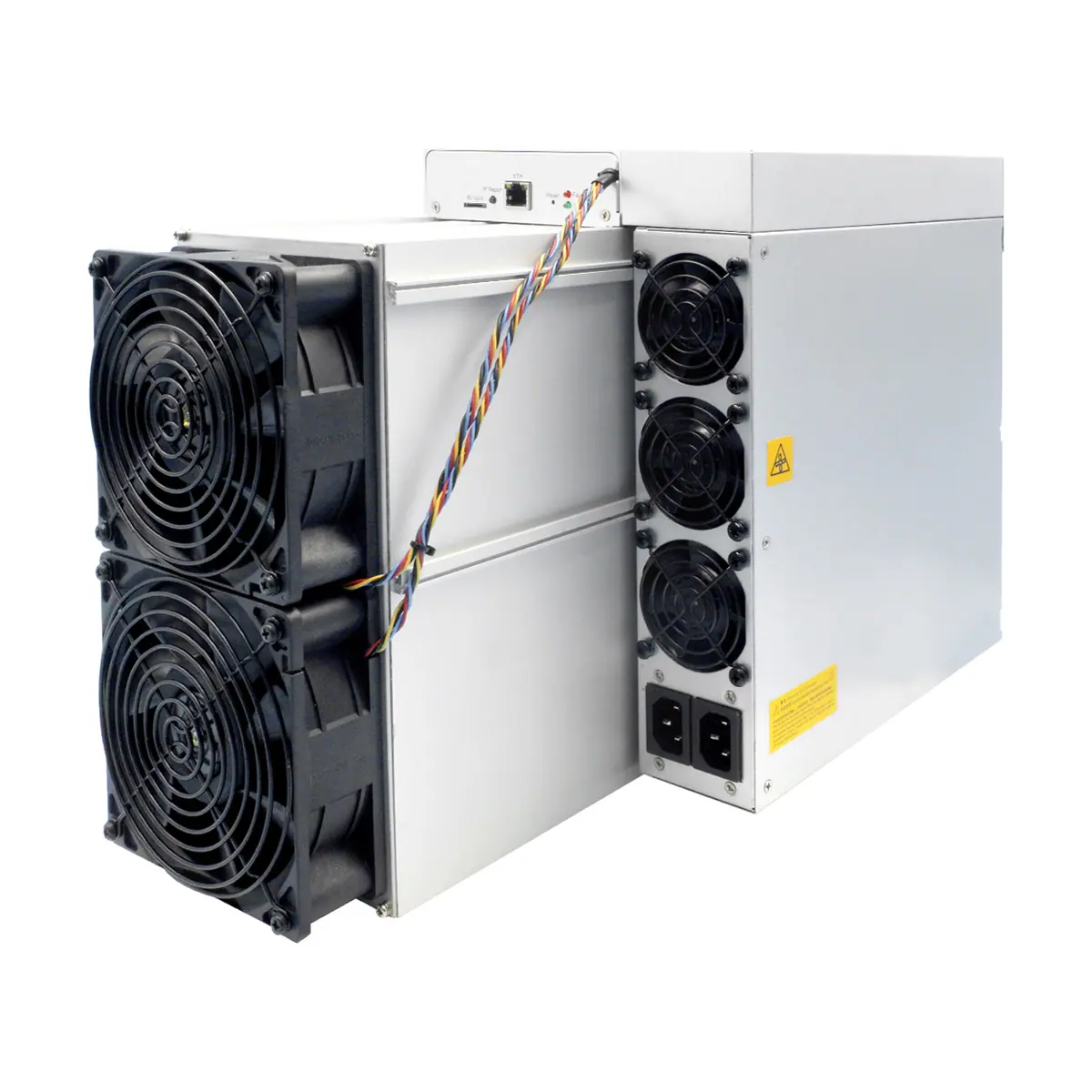
To mine Zcash you need an Equihash ASIC such as the Antminer Z15 Pro, a 200 to 240 V circuit, a Zcash address that starts with t and a pool. On 24 November 2026 a Z15 Pro earned $25.60 a day before electricity and used 66.7 kWh. Blocks have come every 25 seconds since the NU7 upgrade of 5 November 2026.
- Antminer Z15 Pro, income a day before power
- $25.60
- Zcash it mines a day
- 0.0339 ZEC
- Miner’s reward per block
- 0.41666668 ZEC
- Time between blocks
- 25 seconds
The answer to how to mine Zcash changed in November 2026. The network now makes a block every 25 seconds instead of 75 and pays less per block, so most guides quote numbers that no longer exist. What has not changed is the machine: Zcash needs an ASIC built for Equihash, and a handful of models do nearly all the work. This guide covers the choice of machine, the wiring, the wallet, the pool settings, what it pays a day and when solo mining makes sense. Put your own power price into the Zcash mining calculator as you read.
How Zcash mining works now
Zcash runs on Equihash with the parameters 200 and 9. It is a proof-of-work puzzle that needs memory as well as computing, and machines are rated in solutions a second: one kSol is a thousand, one GSol a thousand million. A Bitcoin miner cannot do it, and a Zcash miner cannot mine Bitcoin.
These are the rules since the network upgrade called NU7, which took effect on 5 November 2026:
| Rule | Before NU7 | Now |
|---|---|---|
| Time between blocks | 75 seconds | 25 seconds |
| New ZEC per block, in total | 1.5625 ZEC | 0.52083333 ZEC |
| Part that goes to the miner | 1.25 ZEC | 0.41666668 ZEC |
| Blocks in a day | 1,152 | 3,456 |
| ZEC paid to miners in a day | 1,440 | 1,440 |
The last line of the table is the one to hold on to: blocks are three times as frequent and a third of the size, so a miner's daily income did not change. The current values are on the Zcash page. Two more rules matter:
- A fifth of each block is not for miners. 8 percent funds community grants and 12 percent goes into a reserve.
- Fees are shared. Miners keep 40 percent of the transaction fees, and the rest is set aside to be paid out in later years. Fees are small next to the block reward today.
Difficulty adjusts with every block, over a window of about 42 minutes. Difficulty follows the machines the same day, in both directions.
What you need to mine Zcash
- An Equihash ASIC. Graphics cards no longer earn anything useful; the project's own mining guide says an ASIC is required.
- A 200 to 240 V circuit for current models.
- A wired network connection. These machines have an Ethernet port and no wifi.
- A Zcash address that you control.
- A pool account, or just a pool address: some pools need no sign-up.
- A dry, ventilated place where noise does not matter, or a hosting site.
Which Zcash miner should you buy?
Compare joules per kSol first, then price. These are the main machines, new and old, with what each earned a day on 24 November 2026 before electricity, and the power price it earns up to.
| Machine | Income a day | kSol/s | Power | J/kSol | Stops paying at |
|---|---|---|---|---|---|
| Z15 Pro | $25.60 | 840 | 2,780 W | 3.31 | $0.384 |
| Z15K | $17.22 | 565 | 2,483 W | 4.39 | $0.289 |
| Z15K | $16.00 | 525 | 2,483 W | 4.73 | $0.268 |
| Z15 | $12.80 | 420 | 1,510 W | 3.60 | $0.353 |
| Z15j | $9.75 | 320 | 1,510 W | 4.72 | $0.269 |
| A9++ ZMaster | $4.27 | 140 | 1,550 W | 11.1 | $0.115 |
| Z11 | $4.11 | 135 | 1,418 W | 10.5 | $0.121 |
| Z9 Mini | $0.30 | 10 | 300 W | 30.0 | $0.042 |
Income is from the calculator at a ZEC price of $755. It follows the coin price almost one for one, and that price can move by a tenth in a day. The Zcash miners page has today's income, price and stock for each.
What the table says in practice:
- Antminer Z15 Pro. The most income and the best efficiency in the list. It is a full-size Antminer with a full-size noise. Most buyers who host end up here: see the Z15 Pro page.
- Antminer Z15. Half the hashrate for a little over half the power, in a smaller box. It is a 2020 machine, so check that you are buying one with a warranty or a tested history.
- Antminer Z15K. Newer and cheaper per machine, but thirstier per kSol than the Z15 Pro. It makes sense where power is cheap and the purchase price matters more.
- Z11, A9 and Z9. Old machines that still hash. The Z11 and A9 leave a dollar or two a day at farm prices; the Z9 Mini is one to learn on.
What does a Zcash miner earn a day?
Your income is your share of the network times the ZEC paid to miners in a day. For a Z15 Pro on 24 November 2026:
| Step | Value |
|---|---|
| Your hashrate | 840 kSol/s, which is 840,000 Sol/s |
| Network, average over a day | 35.7 GSol/s |
| Your share | 0.0000235 of the whole |
| ZEC paid to miners in a day | 1,440 |
| You mine | 0.0339 ZEC a day |
| At $755 per ZEC | $25.60 a day |
The calculator does this with live numbers, and the Zcash page shows the pieces. Electricity comes off next. This is the same machine at five power prices, after a pool fee of 2 percent:
| Per kWh | Power a day | Left a day |
|---|---|---|
| $0.06 | $4.00 | $21.08 |
| $0.08 | $5.34 | $19.75 |
| $0.12 | $8.01 | $17.08 |
| $0.17 | $11.34 | $13.75 |
| $0.25 | $16.68 | $8.41 |
The example prices are typical of a farm, a hosting site, a cheap home, an average American home and an expensive European one. Change them in the calculator. Our own rates per kWh, by number of machines, are on the hosting rates page.
They are for one day: the network follows the price within hours.
How to mine Zcash, step by step
1. Plan the power before the machine arrives. A Z15 Pro draws 2,780 W at 200 to 240 V without a break. At 240 V that is 11.6 A, so a circuit of its own with a 15 A breaker is the least it needs, and it uses about 66.7 kWh a day or 2,030 kWh a month (setup guide). It has two power inputs, and both must be connected, each with a cord rated for at least 10 amps. It will not run on a 120 V outlet.
2. Plan the heat and the noise. All of that power comes out as hot air: 9,486 BTU an hour, about what two large space heaters make (setup guide). At about 75 decibels at close range you will hear it through a wall. Give it cool intake air, let the exhaust leave the room, and never let the two meet. The rated room temperature is 0 to 40 degrees Celsius.
3. Get an address. Zcash has more than one kind. An address that starts with t is transparent, like a Bitcoin address. Addresses that start with zs or u are shielded, or can be. Most pools still pay only to transparent addresses, so use one for the pool and move the coins to a shielded address afterwards if you want privacy. Use a wallet that has been updated for NU7, because older transaction formats stopped working on that day. An exchange deposit address works too, but check that the exchange accepts mining payouts and remember it holds the coins, not you.
4. Choose a pool. Look at four things: the fee, how it pays, the smallest payout and where its servers are.
| Pool | How it pays | Fee | Smallest payout |
|---|---|---|---|
| 2Miners | PPLNS, or solo | 1 percent, 1.5 percent solo | 0.1 ZEC |
| F2Pool | PPS+ | 3 percent | 0.1 ZEC |
| EMCD | PPLNS | 1.5 percent | 0.001 ZEC |
| Luxor | See the pool | See the pool | 0.1 ZEC |
Full details and official links are on our Zcash pools page. PPS pays a set amount for each share whether or not the pool finds blocks, for a higher fee. PPLNS pays from the blocks that are found, so days differ. A Z15 Pro reaches 0.1 ZEC in about three days; a Z11 takes nearly three weeks, so with a small machine the low minimum counts for more than the fee.
With a block every 25 seconds, distance matters more than it used to. Work that reaches the pool late is worth nothing. Choose a server on your own continent, and watch the stale or rejected count in the first day. If it stays above 2 or 3 percent, change server.
5. Connect and find the machine. Plug in the network cable first, then power. Wait two minutes, then look up the machine's IP address in your router or with the maker's IP tool. Open that address in a browser on the same network. On an Antminer the user name and password are both root until you change them, which you should do at once.
6. Enter the pool. Open the miner configuration page and fill in three lines for pool 1:
- URL: the pool's stratum address for Zcash and your region, for example stratum+tcp://zec.2miners.com:1010. Each pool lists its own, and our pool list links to them.
- Worker: on a pool without accounts, your Zcash address, a full stop, and a name for the machine. On a pool with accounts, your user name, a full stop and the name.
- Password: x, unless the pool says otherwise.
Fill in pools 2 and 3 with other pools, so the machine has somewhere to go when the first one is down. Save and apply.
7. Check it. After ten minutes the hashrate on the dashboard should be near the rating and all three boards should show. After a day, compare the pool's 24-hour figure with the machine's own. A gap of 2 or 3 percent is normal. A gap of 10 is a fault, usually heat, a weak network link or a dead board.
Can you mine Zcash solo?
Yes, and it is far less of a lottery than Bitcoin. Blocks are small and frequent, so one good machine finds one now and then. At the difficulty of 24 November 2026, 114.6 million:
| Machine | kSol/s | Average wait for a block | Chance within 30 days |
|---|---|---|---|
| Antminer Z15 Pro | 840 | 13 days | 90 percent |
| Antminer Z15K | 525 | 21 days | 77 percent |
| Antminer Z15 | 420 | 26 days | 69 percent |
| Antminer Z11 | 135 | 80 days | 31 percent |
| Antminer Z9 Mini | 10 | 3.0 years | 3 percent |
Each block pays the miner 0.41666668 ZEC, about $315 at a price of $755 (calculator). The average income is the same as in a pool, minus the solo fee, but it comes in lumps. A single Z15 Pro goes a whole month without a block about one time in ten, and the power bill will not wait. Solo suits people with several machines, or with one and a lot of patience.
Running your own node to solo mine is possible but needs a full Zcash node and mining software that feeds the machine. A pool's solo mode gives you the same payouts with none of that. The pools page marks which pools have it.
What can go wrong
| What you see | Likely cause | What to do |
|---|---|---|
| The pool shows nothing | Wrong address or port | Check the stratum line letter by letter; use the Zcash port, not the one for another coin |
| Shares rejected from the first minute | A shielded address where a transparent one is needed, or a typing error | Paste the t address again |
| Many stale shares | Server too far away, or a poor cable | Change region; replace the cable or the switch |
| Hashrate at two thirds | One board is missing | Power off, wait, start again; if it stays away, look up the code |
| It starts and stops | Heat, or a breaker at its limit | Measure the intake air; have the circuit checked |
| It pays much less than expected | Price, network or fee moved | Run the day's numbers again |
Faults with a code are explained in our error code library. Keep a photo of the serial number and the first screen of the log before you write to anyone.
Home or hosting?
A Z15 Pro in a house is a hard sell. It needs a circuit few rooms have, it is as loud as a vacuum cleaner all day and night, and at an ordinary American power price about four tenths of its income goes to the utility. A garage or an outbuilding with cheap power can work, and in winter the heat has a use.
In a hosting site the circuit, the cooling and the noise are somebody else's problem and the price per kWh is lower. The machine still mines to your own pool account and your own address, wherever it stands.
When is the next Zcash halving?
At block 6,132,390, around late November 2028. The miner's part then drops from 0.41666668 to 0.20833334 ZEC a block, and the same machine mines half as much ZEC a day. The Zcash page counts the blocks down. If you buy a machine now, two years is the period it has at today's reward, so that is the period to plan for.
Is mining Zcash worth it?
With an efficient machine and power under about fifteen cents, the numbers on 24 November 2026 leave a clear margin. ZEC is a smaller and livelier coin than Bitcoin, so income moves more, both ways; plan with a margin.
Mining income changes daily with difficulty, price and fees. Not financial advice.
Common questions
Can you still mine Zcash with a GPU?
Not usefully. An Equihash ASIC does the work of hundreds of graphics cards, and the Zcash project itself says an ASIC is needed at the present difficulty.
How much Zcash can you mine in a day?
An Antminer Z15 Pro mined about 0.0339 ZEC a day on 24 November 2026, worth $25.60 before electricity. Other machines earn in proportion to their hashrate.
What is the Zcash block reward?
Since 5 November 2026 each block creates 0.52083333 ZEC, of which the miner receives 0.41666668 ZEC plus 40 percent of the fees. Blocks come every 25 seconds.
Can I mine Zcash solo?
Yes. One Antminer Z15 Pro finds a block about every 13 days on average and has about a 90 percent chance of at least one in 30 days. Weeks without any are normal.
Which wallet do I need for mining Zcash?
Any Zcash wallet that has been updated for the November 2026 upgrade and gives you a transparent address, the kind that starts with t. Most pools pay only to those. Move the coins to a shielded address afterwards if you want privacy.
Can I mine Zcash at home?
You can, with a 200 to 240 V circuit and somewhere the noise and heat do not matter, such as a garage. A Z15 Pro draws 2,780 W and is about 75 decibels, so most owners host it.
Can a Zcash miner mine other coins?
Only coins that use Equihash with the same settings, and Zcash is the main one left; Horizen used it too but no longer uses mining. It cannot mine Bitcoin, Litecoin or Kaspa.
Written by Support Desk
Setup, fixes and warranty claims