
















Power and wiring
ASIC miner power setup: breakers, plugs and cables
ASIC miner power setup by model: amps at 120, 208, 230 and 240 V, the breaker and cable each needs, which plugs fit, PDUs, three-phase and first checks.
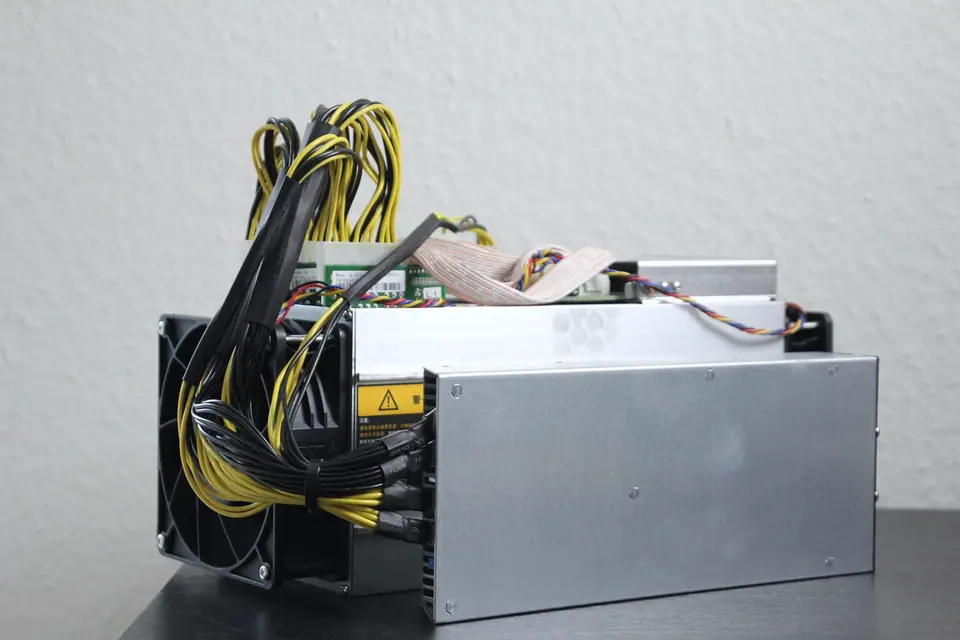
Short answer
A full-size ASIC miner needs its own 220 to 240 V circuit. Divide the highest power the maker allows by the voltage, divide that by 0.8, and round up to the next breaker size: most air-cooled Bitcoin miners land on a 20 A circuit at 240 V and a 30 A circuit at 208 V. Match the cable and plug to the breaker and have a licensed electrician do the work.
- 3,500 W miner at 240 V draws
- 14.6 A
- Circuit that needs at least
- 18.2 A
- A 240 V, 20 A circuit carries all day
- 3,840 W
- A 240 V, 30 A circuit carries all day
- 5,760 W
Most trouble with a new miner at home starts at the wall, not in the machine. A miner pulls close to its full power every minute of the day, which is a harder job for wiring than an oven or a heater that switches on and off. A good ASIC miner power setup is planned before the machine arrives. Start with the income at your power price in the mining calculator: if the machine does not clear its electricity, there is no reason to wire for it.
This guide covers single-phase circuits in the US, Canada and Europe, three-phase for hydro machines, cords, power distribution units and the checks before you switch on. It explains the sums so you can talk to an electrician with the right figures. It does not replace one.
What does an ASIC miner power setup need?
- The right voltage. Nearly all full-size miners take 200 V or more and will not start on 120 V.
- A breaker that carries the miner's current all day, not just for a moment.
- Cable in the wall rated for that breaker.
- An outlet, plug and cord rated for the current, with the connector the miner uses.
- Earth and protection as your local code asks.
- Room to breathe. All that power leaves as heat, so the wiring plan and the airflow plan go together.
How much current does a miner draw?
Current in amps is power in watts divided by voltage in volts. Use the highest power the maker allows, not the number on the advert. Makers rate power with a tolerance, often 5% or 10% (see the setup page of your model), and a hot room pushes a machine towards the top of it.
These are models from our catalog, worked out at the top of each maker's tolerance:
| Model | Rated power | Highest power | At 240 V | At 208 V | At 120 V |
|---|---|---|---|---|---|
| Avalon Q | 1,674 W | 1,841 W | 7.7 A | 8.9 A | 15.3 A |
| WhatsMiner M70, 214 TH/s | 3,140 W | 3,454 W | 14.4 A | 16.6 A | no |
| WhatsMiner M60S, 186 TH/s | 3,441 W | 3,785 W | 15.8 A | 18.2 A | no |
| Antminer S21 XP, 270 TH/s | 3,645 W | 3,827 W | 15.9 A | 18.4 A | no |
| Antminer L11, 20 GH/s | 3,680 W | 3,864 W | 16.1 A | 18.6 A | no |
| Avalon A16, 282 TH/s | 3,900 W | 4,290 W | 17.9 A | 20.6 A | no |
The rated power and input range of every model are on our setup pages.
Voltage changes the answer more than people expect. Homes in North America usually have 240 V between the two live wires. Many apartments and commercial buildings have 208 V instead, and the same machine draws about 15% more current there (breaker sizing shows the sum). Ask which one you have before buying anything.
What size breaker does an ASIC miner need?
Electrical codes in the US and Canada treat a load that runs three hours or more as continuous, and size the circuit so the load stays at or below 80% of the breaker. The sum is current divided by 0.8, then the next standard size up (breaker sizing).
| Model | Sum at 240 V | Circuit | Sum at 208 V | Circuit |
|---|---|---|---|---|
| Avalon Q | 9.6 A | 15 A | 11.1 A | 15 A |
| WhatsMiner M70, 214 TH/s | 18.0 A | 20 A | 20.8 A | 30 A |
| WhatsMiner M60S, 186 TH/s | 19.7 A | 20 A | 22.7 A | 30 A |
| Antminer S21 XP, 270 TH/s | 19.9 A | 20 A | 23.0 A | 30 A |
| Antminer L11, 20 GH/s | 20.1 A | 30 A | 23.2 A | 30 A |
| Avalon A16, 282 TH/s | 22.3 A | 30 A | 25.8 A | 30 A |
Where the sum lands between 20 and 30, electricians use a 30 A circuit, because the matching outlets come in 20 A and 30 A. The method is in our breaker sizing entry.
Here is the sum in full for a 3,500 W miner. At 240 V it draws 14.6 A. Divided by 0.8, that needs a circuit of at least 18.2 A, so 20 A is the next size up. Two of them draw 7,000 W, which is more than a 30 A circuit may carry all day (breaker sizing).
Three lessons from the table:
- A 20 A circuit at 240 V is the working minimum for one full-size air-cooled miner, and some models are so close to the limit that 30 A is the comfortable choice.
- At 208 V plan on 30 A for almost any full-size miner.
- Put one full-size miner on each circuit. Two do not fit on 30 A.
How much can each circuit carry all day?
Turn the rule around and each circuit has a ceiling for continuous power. Anything above it will trip sooner or later, or run the wiring hot.
| Circuit | Continuous limit | What fits |
|---|---|---|
| 120 V, 15 A | 1,440 W | Desk miners, small heaters, home box miners |
| 120 V, 20 A | 1,920 W | One Avalon Q or one 1,800 W home miner, with nothing else on it |
| 208 V, 20 A | 3,328 W | Not enough for most full-size miners |
| 208 V, 30 A | 4,992 W | One full-size air-cooled miner |
| 240 V, 20 A | 3,840 W | One full-size air-cooled miner, checked by model |
| 240 V, 30 A | 5,760 W | One full-size miner with headroom, plus small devices |
| 240 V, 50 A | 9,600 W | Two full-size miners through a power distribution unit |
The limits follow the breaker sizing rule. Then check the whole house. A panel that already feeds a car charger, an oven and a heat pump may have no room for another load that never switches off. Your electrician does that load calculation before adding a circuit.
Can you run an ASIC miner on a 120 V outlet?
Small ones, yes. Desk miners, home box miners and heater models are built for it. A full-size miner is different: at 120 V it would need more than 28 A all day, and its power supply will not start there anyway. Some owners run older machines on 120 V with a different power supply and low-power firmware, at a fraction of the hashrate. That can affect the warranty, so read the maker's terms first.
A dryer or range outlet is tempting because it is already there. It can carry one miner if it is earthed, its breaker and cable suit the current, and nothing else is ever used on it. It was not meant as a permanent connection for a machine that never stops, so a dedicated circuit is the better answer.
What about Europe and the UK?
At 230 V a full-size miner draws about 15 to 19 A at the top of its range (the sum is the same). That rules out the ordinary wall socket. A household socket is made for short peaks at 16 A, not for that current all day, and a UK plug is fused at 13 A. The usual solution is a dedicated circuit with a blue industrial connector rated 32 A, or a fixed connection, protected by a breaker and residual-current device chosen by the electrician.
Homes with a three-phase supply, common in Germany, Austria and Switzerland, can spread several single-phase miners across the three phases. That is neater than loading one phase, and some network operators require it.
Which cable goes with which breaker?
The cable must be rated for the breaker, not for the miner. Typical copper sizes in North American homes are:
| Breaker | Copper cable, usual minimum | Common outlets at 240 V |
|---|---|---|
| 15 A | 14 AWG | NEMA 6-15 |
| 20 A | 12 AWG | NEMA 6-20, L6-20 |
| 30 A | 10 AWG | NEMA L6-30, 6-30 |
| 50 A | 6 AWG | NEMA 14-50, 6-50 |
Long runs, hot attics, conduit shared with other circuits and aluminium wire all call for thicker cable. Outlets that start with L lock with a twist, which is worth having on a machine that vibrates all day.
Which plug and cord does your miner use?
Check the inlet before you order cords, because there are now several in use.
| Inlet or cord | Where you find it | What to know |
|---|---|---|
| C13 and C14 | Home miners, network gear | Too small for most full-size miners |
| C19 and C20 | Most WhatsMiner air models, many older Antminers | Rated 16 A under IEC, 20 A in North America |
| P13 and P14 | Antminer S21 XP, Antminer L11 | Bitmain single-phase; a C20 to P13 cord fits a C19 outlet |
| PA45 | Some Avalon, SealMiner and Teraflux models | High-current plug with its own cord |
| P33, LP20, LP34, SA2-30 | Three-phase hydro and immersion machines | Needs a matching power distribution unit |
The C19 and C20 entry explains the ratings. Older Antminers with two inlets need both cords on the same phase and circuit. Do not use adapters, household power strips or coiled extension leads. Coils hold heat, and a loose plug is where most melted connectors begin.
When do you need a power distribution unit?
A power distribution unit, or PDU, takes one large feed and splits it into protected outlets. For two or more machines it is tidier and safer than a row of wall outlets, and a metered one shows what each machine uses. Match four things: the input plug to your outlet, the outlets to your miners' cords, the total continuous limit, and the breaker on each outlet.
A common home unit has an L6-30 plug, 240 V and 30 A, which gives 5,760 W all day. That runs one full-size miner and leaves about two kilowatts for desk miners, fans or a switch. It does not run two. For rows of machines, three-phase units carry 12 or 24 outlets. Our PDUs list the input, outlets and limits of each.
When do miners need three-phase power?
Most hydro and immersion machines need it, and no home single-phase outlet can replace it. Three-phase current is power divided by 1.732 and by the line voltage, then the 80% rule again (three-phase power).
| Model | Rated power | Per phase, 400 V | Circuit |
|---|---|---|---|
| Antminer S23 Hyd | 5,510 W | 8.4 A | 15 A |
| WhatsMiner M73S+ | 7,200 W | 11.4 A | 15 A |
| Antminer S23e Hyd 2U | 8,650 W | 13.1 A | 20 A |
| Antminer S23 Hyd 3U | 11,020 W | 16.7 A | 30 A |
Current is worked out at the top of each maker's tolerance, as in three-phase power. The breaker must also suit the machine's plug and the PDU it feeds from.
Check the input range as well as the current. Several Antminer hydro models take 380 to 415 V and are not made for 480 V. US sites with 480 V service put a transformer in between, usually giving 415 V between phases and 240 V from each phase to neutral, so the same supply runs air-cooled machines too.
What should you check before you switch on?
- Measure the voltage at the outlet and compare it with the miner's input range.
- Check that breaker, cable, outlet and cord all carry the current in the tables above.
- Seat the plug fully and leave the cord uncoiled and off the floor where air moves.
- Turn the fans to face the right way: cold air in, hot air out of the room.
- Switch on one machine at a time. Wait for it to reach full speed before starting the next.
- After an hour, feel the plug and the breaker. Warm is normal. Hot, discoloured or smelling of plastic means stop and call the electrician.
- Read the miner's power and the voltage under load. If voltage sags as the miner ramps up, the run is too long or too thin.
- Check again after a week and then every few months. Connections loosen with heat and vibration.
What do power errors on the miner mean?
The miner often tells you about the supply before anything fails. WhatsMiner code 206 or 271 means the input dropped below about 190 V, code 218 means it is under 230 V while the machine is set to a high-performance mode, and code 270 means it rose above about 285 V. On an Antminer, "power voltage can not meet the target" goes with a low or unstable input or a board fault. Look up the exact text in error codes before you replace a power supply, because a weak circuit can look like a bad one.
What does the power cost to run?
A 3,500 W miner running all day uses 84 kWh, so each cent per kWh on your bill changes the cost by $0.84 a day (try your own price). Add the one-off cost of the circuit, which depends on the distance from your panel and local labour, and ask for a written quote before you order the machine.
If the sums do not work at home, the same machine can run in our facility, where the circuit, cooling and technicians are already in place and you pay a set rate per kWh. See hosting pricing.
Common questions
What breaker do I need for a 3,500 W miner?
On 240 V it draws about 14.6 A, so with the 80% rule it needs at least 18.2 A, which means a 20 A circuit. On 208 V the same machine needs a 30 A circuit.
Can I plug an ASIC miner into a normal wall socket?
Desk, home and heater models, yes. Full-size miners, no. They need a dedicated 220 to 240 V circuit sized for their current.
Can two miners share one 30 A circuit?
Two full-size miners cannot. A 240 V, 30 A circuit carries 5,760 W all day, and two such machines draw about 7,000 W. One full-size miner plus a few desk miners fits.
Does running on 240 V instead of 120 V save electricity?
A little, because power supplies are slightly more efficient at higher voltage and the wiring loses less. Most full-size miners only accept 200 V or more anyway.
Can I use my dryer outlet for a miner?
One miner can run there if the outlet is earthed, the breaker and cable suit the current and the dryer is never used at the same time. A dedicated circuit is safer for a machine that never switches off.
Do I need three-phase power?
Only for machines that list three-phase input, which are mostly hydro and immersion models. Air-cooled miners run on single phase.
Do I need an electrician and a permit?
Plan on both. Adding a circuit means work in your panel, and in most places it must be done or signed off by a licensed electrician, often with a permit.
How much electricity does a miner use in a month?
Its power in kilowatts times 24 hours times the days in the month. A 3,500 W miner uses 84 kWh a day, so about 30 times that in a month.
Written by Support Desk
Setup, fixes and warranty claims