Getting started
Mining algorithms compared: what each one secures and which machine runs it
Mining algorithms compared side by side: the coins SHA-256, Scrypt, kHeavyHash, Equihash, Etchash, RandomX and Blake3 secure, and the machines for each.
Short answer
A mining algorithm is the puzzle a coin asks its miners to solve, and an ASIC miner is built for one kind. SHA-256 secures Bitcoin, Scrypt secures Litecoin and Dogecoin, kHeavyHash Kaspa, Equihash Zcash, Etchash Ethereum Classic, RandomX Monero and Blake3 Alephium. Choose the algorithm first, then compare efficiency inside it, never across it.
- Antminer S23 hashrate
- 318 TH/s
- Antminer S23 power
- 3,498 W
- Antminer S23 efficiency
- 11 J/TH
- Power of the largest hydro units on the SHA-256 shelf
- 11,000 W
Buy a miner and you have bought an algorithm. The chips inside are wired for one kind of sum, so the choice you make on the first day decides which coins the machine can ever earn. That is why our shop can be browsed by algorithm as well as by coin. Seven of them cover most of what people mine with an ASIC today, and this post puts them side by side.
Seven mining algorithms compared in one table
The machines are from our catalog, with the specs shown on each shelf on 24 November 2026. The last column is our own sum: the hashrate of the whole coin that evening, divided by the speed of one machine.
| Algorithm | Secures | Example machine | Speed and power | Efficiency | Machines that size in the network |
|---|---|---|---|---|---|
| SHA-256 | Bitcoin, Bitcoin Cash, Bitcoin SV | Antminer S23 | 318 TH/s, 3,498 W | 11 J/TH | 3.3 million |
| Scrypt | Litecoin, Dogecoin and smaller coins | Antminer L11 | 20 GH/s, 3,680 W | 184 J/GH | 130,000 |
| kHeavyHash | Kaspa | Antminer KS7 | 45 TH/s, 3,080 W | 68.4 J/TH | 7,060 |
| Equihash | Zcash, Horizen | Antminer Z15 Pro | 840 kSol/s, 2,780 W | 3.3 J/kSol | 38,900 |
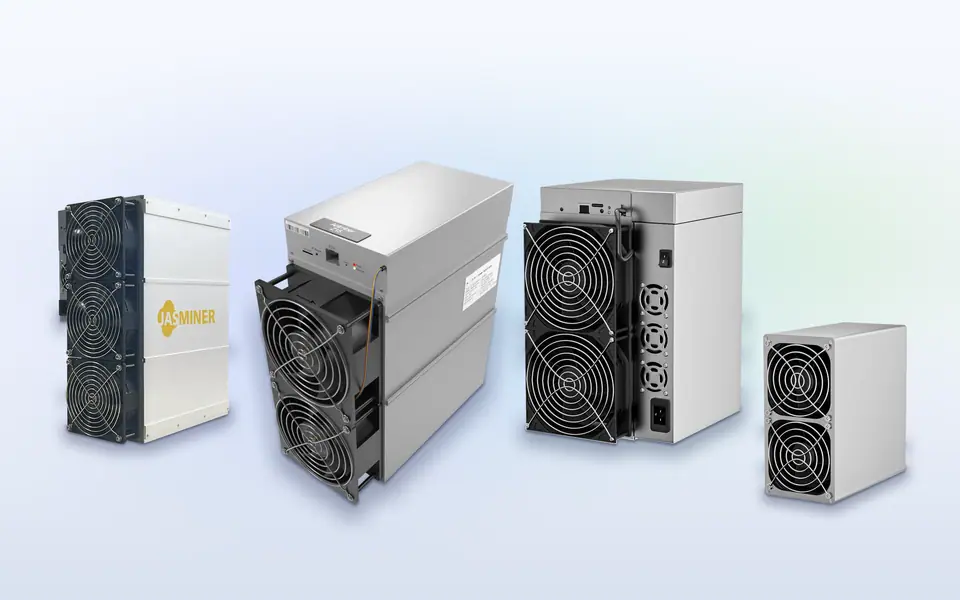
| Etchash | Ethereum Classic | Jasminer X44-P | 23,400 MH/s, 2,340 W | 0.1 J/MH | 5,460 |
| RandomX | Monero | Antminer X5 | 212 kH/s, 1,350 W | 6.4 J/kH | 32,500 |
| Blake3 | Alephium | Antminer AL1 Pro | 16.6 TH/s, 3,730 W | 225 J/TH | 301 |
The network hashrates behind that last column come from our network page: 1.04 ZH/s for Bitcoin, 2.6 PH/s for Litecoin, 317.8 PH/s for Kaspa, 32.7 GSol/s for Zcash, 127.7 TH/s for Ethereum Classic, 6.9 GH/s for Monero and 5.0 PH/s for Alephium. They move every day.
Read the column as the size of the room. Bitcoin is a stadium where one machine is a single seat. Alephium is a small hall. A big room fills slowly and evenly. In a small room a few pallets of new machines change everybody's share within weeks.
Why can't the efficiency numbers be compared?
An Antminer S23 spends 11 joules on a terahash and an AL1 Pro spends 225. That does not make one of them twenty times better. A terahash of SHA-256 and a terahash of Blake3 are different amounts of work for different coins, like kilometres and kilograms.
The units add to the confusion. SHA-256, kHeavyHash and Blake3 machines are rated in terahashes, Scrypt in gigahashes, Etchash in megahashes, RandomX in kilohashes. Equihash does not count hashes at all. It counts solutions, so its machines are sold in kSol/s.
Three habits keep you out of trouble:
- Compare joules per unit only between machines on the same shelf.
- Check the prefix. Some Scrypt machines are quoted as 0.184 J/MH and others as 184 J/GH, which is the same number written twice.
- Across algorithms, compare income per day and power per day. Those share a currency.
SHA-256: the largest network and the widest choice
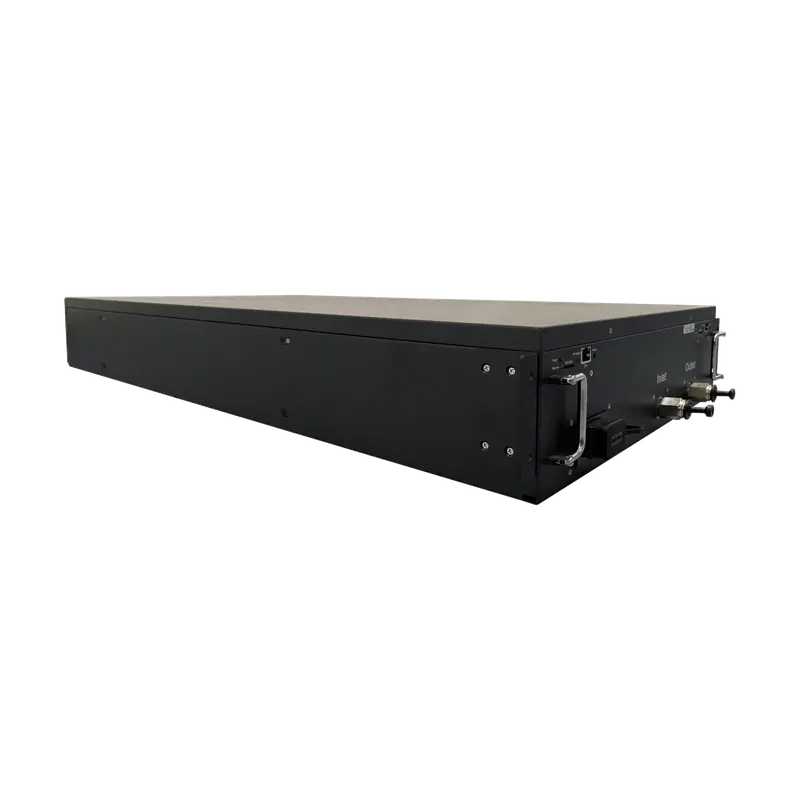
Bitcoin hashes each block header with SHA-256, twice. It is a public standard from the United States' federal hash family, simple to build in silicon, and more than a decade of competition has gone into doing it with less power. Our shelf shows it: SHA-256 holds more than half of all the machines we list, from desk devices that draw a few watts to hydro units above 11,000 W.
Two other coins use the same sum, Bitcoin Cash and Bitcoin SV, and a SHA-256 machine can be pointed at them by changing the pool address. Both networks are far smaller.
It suits the buyer who wants the deepest market: many makers, many sizes, and the most repair knowledge.
Scrypt: one machine, two main coins
Scrypt was published as a way to turn passwords into keys, and its point was to make guessing expensive by forcing the computer to use memory as well as arithmetic. Litecoin adopted a small setting of it, and Dogecoin followed. A miner therefore carries fast memory beside its logic, which is one reason a Scrypt machine is rated in gigahashes while a Bitcoin machine of the same size is rated in terahashes.
The two coins can be mined at once, with the same work. No other algorithm on this list gives you two large coins from one plug.
kHeavyHash: Kaspa's own recipe
Kaspa's node software mixes each block hash with a matrix of 64 by 64 small numbers, then hashes the result again. The multiplication step gives the algorithm its name. Blocks arrive about every tenth of a second, so a pool miner is paid in many small steps.
The shelf runs from quiet boxes under 40 dB to the 45 TH/s Antminer KS7. Kaspa lowers its reward a little every month by schedule, so look at the date beside any income figure you read.
Equihash: counting solutions
Equihash asks for a set of numbers that cancel out in a particular way, which takes memory to search. Zcash fixes the parameters at 200 and 9, so you will see "Equihash (200, 9)" on spec sheets. Other settings exist, and a machine built for one does not run another.
The official Zcash mining guide says plainly that an ASIC is needed at today's difficulty. Almost all of ours are Antminers of the Z series, air-cooled and the size of any other full-size miner.
Etchash: the one where memory ages
Ethereum Classic uses a changed version of the algorithm Ethereum had before it moved to staking. Miners hold a large dataset in memory, and it grows over time. In 2020 the network doubled the length of an epoch from 30,000 blocks to 60,000, which halved the growth, and the changed algorithm was named Etchash. It has run since block 11,700,000.
So there is one spec here that matters nowhere else on this list: how much memory the machine has. A fast machine with too little memory stops mining the coin one day. Ask for the figure, above all on a used unit.
The good side is efficiency and noise. Several machines on this shelf are quiet enough for an office.
RandomX: written for processors, now with machines
RandomX was designed so that ordinary CPUs do it well. Every hash runs small random programs on a virtual processor, and the fast mode wants 2,080 MiB of memory. Its authors set out to keep the advantage of special hardware small, so a dedicated machine has to behave a good deal like a computer.
There are two on the shelf, the Antminer X5 and the much faster Antminer X9, which is a pre-order for March 2027. Because any spare computer can join, Monero's hashrate is spread over machines, servers and desktops.
Blake3: fast, young and specific
Blake3 is a general-purpose hash and one of the fastest in software. Alephium hashes its blocks with it and spreads them over 16 chains that run side by side. The Blake3 shelf goes from cards that draw 45 W to 3,730 W machines.
Watch the name. Other coins use Blake3 too, with their data laid out differently. A machine is made for a coin, so buy by the coin on the product page and not by the word on the box.
Can a miner change its algorithm?
A single-purpose ASIC cannot. Firmware changes speed, fans and power, never the sum. What you can change is the coin, inside the same algorithm: a SHA-256 machine between Bitcoin and Bitcoin Cash, an Equihash machine between Zcash and Horizen.
We also list machines marked multi-algorithm. They can do several sums, and you choose one at a time. Their spec sheet gives a separate speed for each, so check the line for the coin you want.
Four questions that pick the algorithm
- Which coin do you want to hold? If you have an answer, you are done. Every coin has one algorithm, and the shelf follows from it.
- How much room and power do you have? Small boxes exist for Kaspa, Alephium and Ethereum Classic. Zcash and Scrypt machines are mostly full size. Bitcoin has everything.
- How long do you plan to run it? Large networks with many makers have steady demand for machines of every age. Younger coins can pay well per watt and change faster.
- What is the second coin? SHA-256, Scrypt and Equihash give you another coin to point at. Kaspa, Monero and Alephium machines have fewer places to go.
Then open the shelf, sort by efficiency, and look at the income and the power at your own price. The algorithm list shows every shelf with its best machine on one screen.
Common questions
What is the most mined algorithm?
SHA-256. Bitcoin alone ran at about 1.04 ZH/s on 24 November 2026, and more than half of the machines in our catalog are built for it.
Can a Bitcoin miner mine Litecoin?
No. Bitcoin uses SHA-256 and Litecoin uses Scrypt. The chips are wired for one of them and firmware cannot change that.
Which algorithm is the most efficient?
There is no answer across algorithms, because a hash of one is not the same work as a hash of another. Compare efficiency inside an algorithm, and income and power between them.
What does kSol/s mean?
Thousands of solutions a second. Equihash miners search for solutions rather than hashes, so an Antminer Z15 Pro is rated at 840 kSol/s.
Is Ethash the same as Etchash?
Nearly. Etchash is Ethash with epochs twice as long, used by Ethereum Classic since block 11,700,000. Many machines do both with the right firmware.
Can one machine mine several coins at once?
With Scrypt, yes: Litecoin and Dogecoin share the same work through a pool that supports it. With the other algorithms here you usually choose one coin at a time.
Is RandomX really mined with special machines?
Yes. It was designed to favour CPUs, and machines for it exist all the same: the Antminer X5 does 212 kH/s at 1,350 W.
Written by Hardware Desk
Reviews, comparisons and buying guides