Network and blocks
What is X11?
X11 is Dash's proof-of-work algorithm, a chain of eleven hash functions run one after another.
- Coin
- Dash, launched January 2014
- Hash functions
- eleven, in a fixed order
- First in the chain
- BLAKE
- Last in the chain
- ECHO
- Difficulty change
- every block
What it means in practice
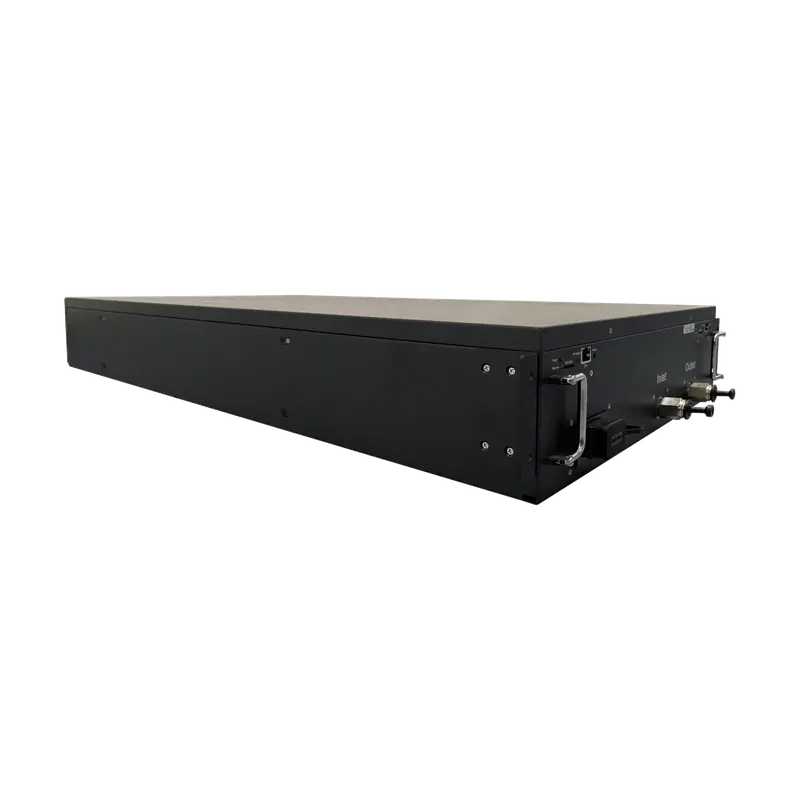
X11 ASIC miners are quoted in GH/s or TH/s. The algorithm was chosen for lower power per hash than SHA-256 at the time, and today it is mined with dedicated ASICs.
Mining Dash today
Dash blocks arrive about every two and a half minutes, and a block’s reward is shared between miners, masternodes and the treasury. A pool pays the miners’ part by work done. Machines are compared in joules per gigahash.
The chain of eleven
The order is BLAKE, BMW, Grøstl, JH, Keccak, Skein, Luffa, CubeHash, SHAvite, SIMD and ECHO. All were candidates in the contest that chose SHA-3, so each had been studied by specialists. The output of one is the input of the next, 512 bits wide, and the last result is cut to 256.
A chip needs a block of circuitry for every function. They differ in size and speed, so a designer builds more copies of the slow ones to keep the line moving. That is why X11 chips are larger than SHA-256 chips for the same number of hashes.
From cool cards to ASICs
In its first years X11 was liked because graphics cards ran cooler on it than on Scrypt. Programmable chips came next. The first dedicated machines appeared in 2016, and within months cards had no part left.
Units grew along the way. Early machines were sold in MH/s, then GH/s, and large ones now reach TH/s. A listing without the unit, or with a mixed one, is worth a second look.
Older X11 machines are still sold second-hand. Their hashrate looks tiny beside a current one, and the watts are almost the same. Work out joules per gigahash first, and look at fans and noise next, because many early models were loud for their size.
How a Dash block is divided
By the network’s rules since 2023, 20% of the block subsidy goes to miners, 60% to masternodes and 20% is kept for the treasury. A block page in an explorer shows the whole. When you work out a miner’s part, start from the 20%.
Example figures: subsidy 2 DASH, 553 blocks a day. Miners receive 2 × 0.20 × 553 = 221 DASH together. A machine with 0.1% of the hashrate expects 0.22 of them, before the pool’s fee. Forgetting the split gives a figure five times too high.
Difficulty that follows quickly
Dash adjusts after every block, using the times of recent blocks. If a large farm leaves, the network recovers within an hour instead of two weeks. The other side is that a sudden low never lasts long enough to plan with.
Efficiency is compared in joules per gigahash. Example figures: 1,700 GH/s at 2,720 W is 1.6 J/GH.
Common mistakes
- Working out earnings from the full block reward instead of the miners’ part.
- Reading GH/s as TH/s in an old listing.
- Assuming X13 or X16R machines share the algorithm because the names look alike.
Common questions
Why eleven functions?
Chaining several meant that a weakness in one would not break the whole.
Can an X11 miner mine other coins?
A few smaller coins use X11. Dash is by far the largest.
Is X11 more secure than SHA-256?
Both are considered sound. X11 spreads the trust over eleven functions, and SHA-256 has the longest record in use.
What is ChainLocks?
A Dash feature in which masternodes sign the first block they see at a height. It makes rewriting recent blocks very hard, on top of the work of miners.
Can a Litecoin miner mine Dash?
No. Litecoin uses Scrypt, and its chips cannot run the eleven functions.